

A 75-year-old Canadian woman, blind for a decade due to corneal scarring, has regained her vision through an unprecedented and complex surgical method. The groundbreaking procedure—known as osteo-odonto keratoprosthesis or “tooth-in-eye” surgery—involves using the patient’s own tooth to anchor an artificial cornea. This innovative surgery has allowed Gail Lane to see her partner’s face, her dog’s wagging tail, and even the beauty of nature again, marking a major medical first in Canada.
What Is Tooth-in-Eye Surgery & How Does It Work?
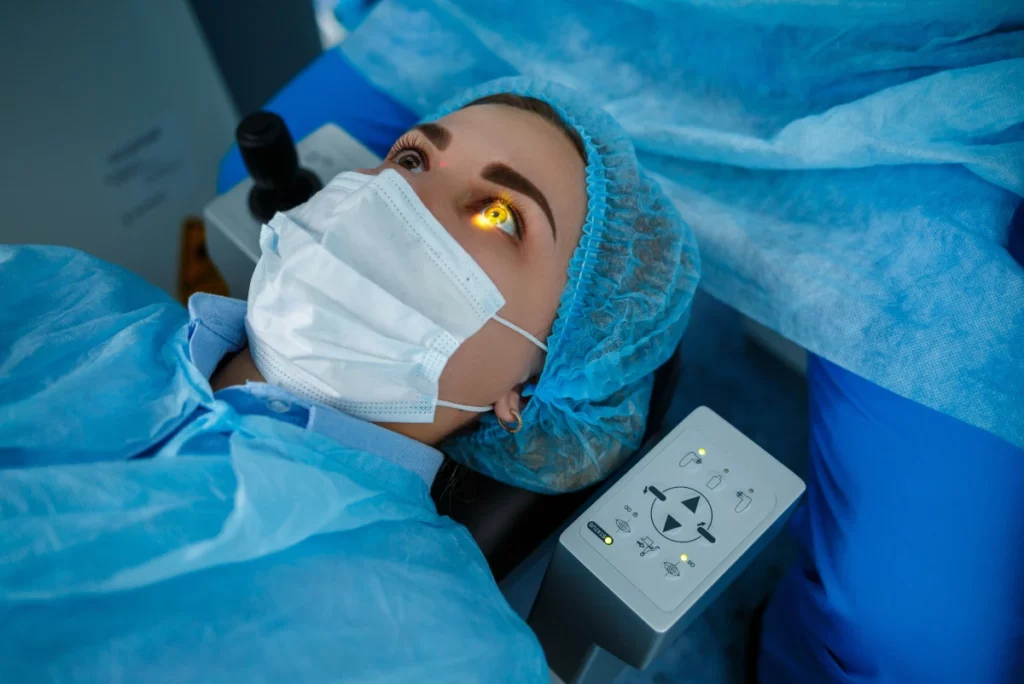
Tooth-in-eye surgery (oste-oodonto keratoprosthesis, or OOKP) is a rare, multi-stage procedure for restoring sight in cases where the cornea is irreversibly damaged. It uses a patient’s own tooth—usually a canine—and surrounding tissue to create a stable platform for a lens). Surgeons first reshape the tooth into a lamina, integrate a tiny plastic focusing lens or telescope, and implant it into the cheek, allowing connective tissue to envelop it. Several months later, this tooth-lens complex is transplanted into the eye socket, effectively replacing the cornea.
This procedure minimizes the risk of rejection, as the implant is constructed from the patient’s own biological tissue, ensuring better integration than synthetic corneal grafts.
Who Is Gail Lane & What Led to This Surgery?
Gail Lane, a 75-year-old Canadian woman, lost her vision a decade ago caused by corneal scarring resulting from an autoimmune condition. Life without sight was isolating—but she never lost hope.
Dr. Greg Moloney at Vancouver’s Mount Saint Joseph Hospital—part of Providence Health Care—brought this pioneering surgery to Canada and led Lane’s treatment, one of the first in the country.
How Did Her Vision Return?
Lane’s sight returned gradually. At first, she could detect light—and shortly after, she saw movement, including the wagging tail of her partner’s guide dog, Piper. Over time, colors and outdoor scenes—trees, grass, flowers—came into view. And six months post-surgery, she saw the face of her partner, Phil, for the very first time. She’s now beginning to recognize facial features in others too.

Why Is This Surgery So Remarkable?
Tooth-in-eye surgery is extraordinarily rare—only a handful of surgeries like this have ever been performed in Canada, and globally it remains reserved for the most severe corneal blindness cases.
The procedure has deep roots: it was pioneered in Italy in the 1960s, and decades of data now show long-term efficacy and anatomical survival of OOKP implants—even up to 30 years in some studies.
What Does This Mean for Patients?
For Gail, the surgery is nothing short of transformative—it offers independence for short trips and daily tasks, and a return to experiences she’d long taken for granted. She’s looking forward to refining her vision with new glasses and hopes to keep improving with time.
Beyond her personal journey, this successful surgery sets a precedent in Canada, showing that even the most complex and seemingly impossible procedures can restore sight and enrich lives.
While we don’t offer tooth-in-eye surgery, we do offer life-changing solutions for patients needing All-on-4 dental implants. Come see us for treatment that’s innovative, comfortable, and exactly where it should be and call us at (833) 454-4579 to book an appointment today.