

Peri-implant mucositis and peri-implantitis are common peri-implant diseases that can threaten the success of All-on-4 implants. Because full-arch restorations rely on several implants, inflammation in even one site can compromise stability. Early diagnosis and timely treatment of peri-implant mucositis are critical to protecting your smile.
What is Peri-Implant Mucositis?
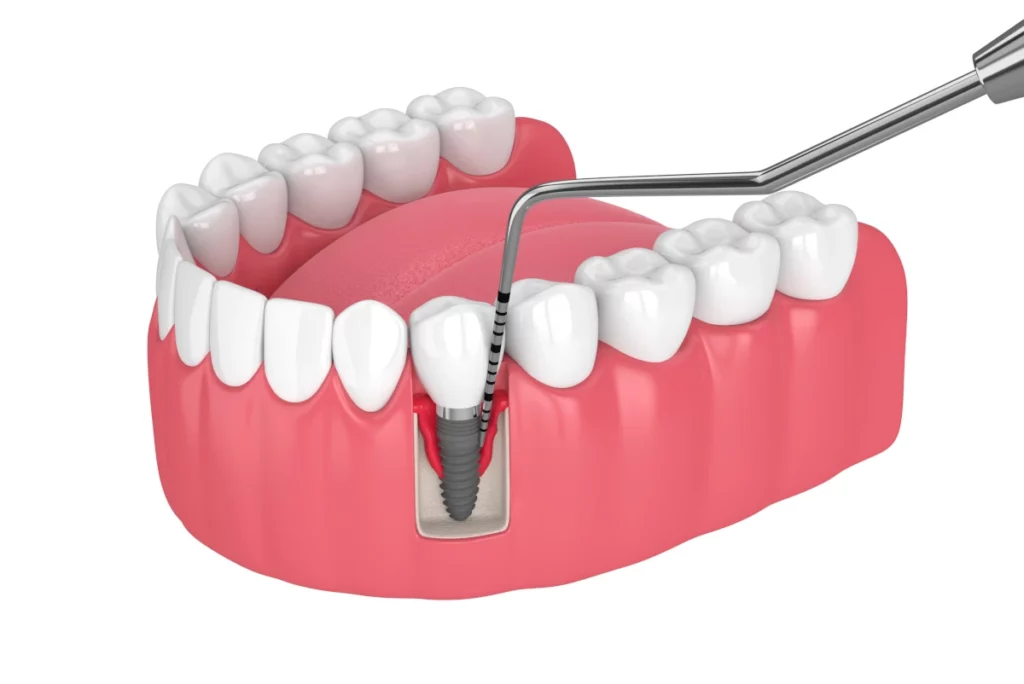
Peri-implant mucositis is inflammation of the gum tissue surrounding the implant. Much like gingivitis around natural teeth, it is caused by the accumulation of plaque and bacteria. Symptoms of peri-implant mucositis may include redness, swelling, and bleeding on probing.
Patients with peri-implant mucositis often don’t notice discomfort, which is why routine implant maintenance is so essential. If left untreated, the condition can progress into peri-implantitis — a destructive disease marked by bone loss around implants. Once bone loss exceeds the crestal bone level, restoring stability becomes significantly more challenging to treat.
What Causes Peri-Implant Mucositis in All-on-4 Implants?
The primary cause of peri-implant mucositis is the accumulation of plaque around the implant surface. Other factors increase the risk, including:
- Retained cement around a restoration that irritates the gum tissue
- Inadequate oral hygiene, leading to plaque accumulation and inflammation
- Smoking, which can increase the risk of peri-implant disease
- Systemic health factors that impair the immune response
For All-on-4 patients, plaque control can be more challenging because food particles often accumulate beneath the full-arch prosthesis. Without consistent cleaning, the mucosal tissues surrounding the implant are more likely to develop inflammation.
Diagnosis of Peri-Implant Mucositis and Peri-Implantitis
Your dentist will assess bone levels using a radiograph, check for bleeding on probing, and evaluate clinical signs such as suppuration, swelling, and tissue redness. Radiographic evidence of marginal peri-implant bone loss may indicate a condition called peri-implantitis.
Accurate diagnosis is critical, as progression from mucositis to peri-implantitis involves bone remodelling and loss beyond crestal bone level changes. Detecting peri-implant mucositis early makes management of peri-implant mucositis far more predictable.
Treatment of Peri-Implant Mucositis
The treatment of peri-implant mucositis focuses on eliminating inflammation and maintaining a clean implant surface. Professionally administered options may include:
- Mechanical debridement with ultrasonic and other instruments
- Air polishing around the implant
- Removal of plaque and any retained cement
- Patient education on oral hygiene with interdental brushes
In some instances, photodynamic therapy or short-term systemic antibiotics may support healing. By controlling plaque and improving gum tissue health, bone levels can remain stable, preventing bone loss around implants.
When Does Peri-Implant Mucositis Progress to Peri-Implantitis?
When peri-implant mucositis is left untreated, it can progress to peri-implantitis. This more advanced disease involves soft tissue inflammation and bone loss around implants. Once bone loss occurs, it is much more difficult to reverse, and the risk of implant loss increases.
Clinical signs of peri-implantitis include:
- Deep periodontal pockets around an implant
- Suppuration and persistent bleeding on probing
- Radiographic bone loss around implants
- Bone loss beyond the crestal bone level
Peri-implantitis requires advanced treatment, often surgical. For more information on peri-implantitis surgical management, please visit our gum surgery specialists.
Prevention of Peri-Implant Disease in All-on-4 Patients
Preventing peri-implant disease is the best way to protect your All-on-4 implants. Patients with peri-implant mucositis should:
- Brush thoroughly and use interdental brushes or a water flosser to clean under the bridge
- Schedule routine implant check-ups to assess bone levels
- Avoid smoking, which makes peri-implantitis progression more likely
- Ensure restorations are free of cement around the implant
With consistent maintenance of the implants and regular professional care, peri-implant mucositis can be controlled, protecting the stability of your restoration.
Surgical Treatment of Peri-Implantitis
If peri-implantitis has already developed, surgical intervention may be necessary. Surgical options include flap procedures to access the implant surface, mechanical cleaning, and regenerative therapies to rebuild lost bone. Use of systemic antibiotics may be recommended in complex cases.
While surgery can stabilize the condition, prevention and early detection of peri-implant mucositis remain far more effective.
Protect Your All-on-4 Smile in NYC, NJ, Long Island & Westchester
At our All-on-Four Dental Implant Centers, we specialize in the diagnosis, prevention, and treatment of peri-implant mucositis and peri-implantitis. Whether you already have an All-on-4 restoration or are considering one, protecting the gum tissue and bone around the implant is essential.
If you also have single-tooth dental implants or other restorations, our partner sites can guide you to the proper care. Schedule your free consultation today in NYC, NJ, Long Island, or Westchester by calling (833) 454-4579 to maintain a healthy and stable smile.